Aurora Forecasting & Viewing
Explore 5 fascinating articles about aurora forecasting & viewing
Track solar winds and plan your northern or southern lights viewing trips. Learn to read auroral activity forecasts.
All Articles (5)
How to Photograph the Northern Lights
Photographing the Northern Lights requires more than choosing one fixed camera setting. This practical guide explains how to select a camera and lens, focus accurately on stars, stabilize your equipment, and adjust shutter speed, aperture, and ISO according to the aurora’s brightness and movement. It includes starting settings for fast, moderate, and faint displays, along with a Motion–Brightness–Foreground framework that helps photographers make better decisions as conditions change. Readers will also learn how to use a smartphone Night mode, compose a stronger foreground, protect color-channel highlights, edit images responsibly, and disclose exposure blends clearly. A quick-reference card, three-frame comparison method, packing checklist, safety guidance, and detailed troubleshooting table make the article useful in the field. The guide relies on published guidance from NASA, NOAA, Nikon, Canon, and Apple while clearly distinguishing authoritative information from adjustable photography recommendations.
How Far South Can the Northern Lights Be Seen?
The northern lights usually remain within high-latitude regions, but powerful geomagnetic storms can carry visible aurora surprisingly far south. This guide explains why there is no single worldwide southern boundary and shows how geomagnetic latitude, the auroral oval, Kp, storm intensity, emission altitude, darkness, cloud cover, and local light pollution affect what an observer may see. It examines NOAA’s generalized U.S. visibility examples for G1 through G5 storms, while clarifying that locations such as Alabama, Florida, and southern Texas represent rare historical possibilities rather than guaranteed forecast limits. Readers will also find an original four-gate decision framework, an auditable geometric viewing-distance example, regional viewing guidance, a practical checklist, and troubleshooting advice for distinguishing faint aurora from clouds or artificial sky glow. The article helps observers decide when a forecast justifies going outside or traveling to a safer, darker viewing site.
What Are the Best Conditions for Seeing the Northern Lights?
The best Northern Lights viewing conditions occur when geomagnetic activity, clear weather, darkness, and a suitable observing location align. This guide explains why the position of the auroral oval matters more than relying on a single Kp value and shows how cloud cover, twilight, light pollution, moonlight, atmospheric transparency, and horizon visibility affect what an observer can see. It introduces the Five-Gate Aurora Viewing Framework, a practical planning tool that evaluates aurora activity, clouds, darkness, location, and available viewing time without presenting the result as a guaranteed probability. Readers will also learn how to compare short- and long-range forecasts, convert UTC forecast periods, choose a safe dark-sky site, recognize faint aurora, and troubleshoot a promising forecast that produces no visible display. The article is based on guidance from NOAA, NASA, the University of Alaska Fairbanks, and the National Park Service.
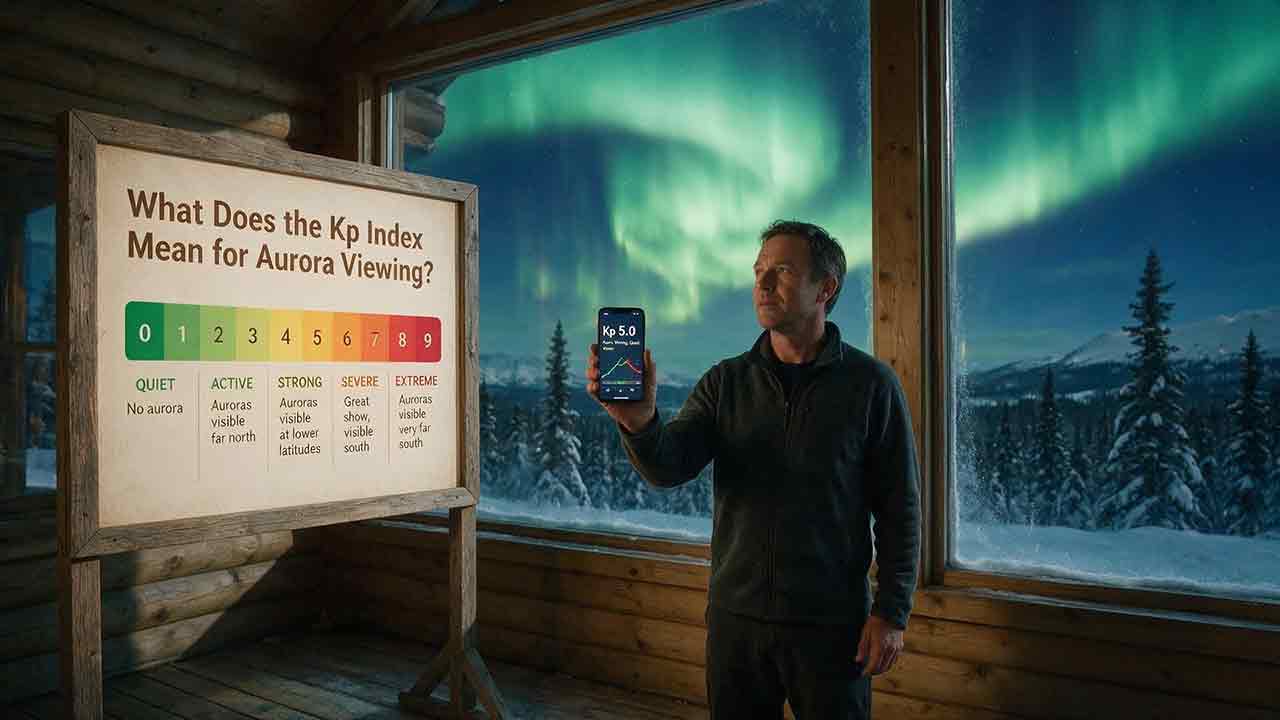
What Does the Kp Index Mean for Aurora Viewing?
The Kp index measures global geomagnetic activity on a scale from 0 to 9, but it is not a local aurora brightness score. This practical guide explains what different Kp levels mean, how NOAA’s G1–G5 storm categories relate to Kp, and why magnetic latitude, the auroral oval, cloud cover, darkness, and timing still determine whether the northern or southern lights are visible. Readers will learn how to interpret three-hour UTC forecasts, understand decimal and traditional Kp notation, and avoid common mistakes such as waiting for Kp 5 inside the normal auroral zone. The article also introduces the original Reach–Timing–Sky–Signal framework, a viewing decision matrix, troubleshooting guidance, and a pre-departure checklist. Using authoritative NOAA and GFZ documentation, it turns a global space-weather measurement into a realistic decision tool for travelers, photographers, high-latitude residents, and middle-latitude aurora watchers.
How to Read an Aurora Forecast
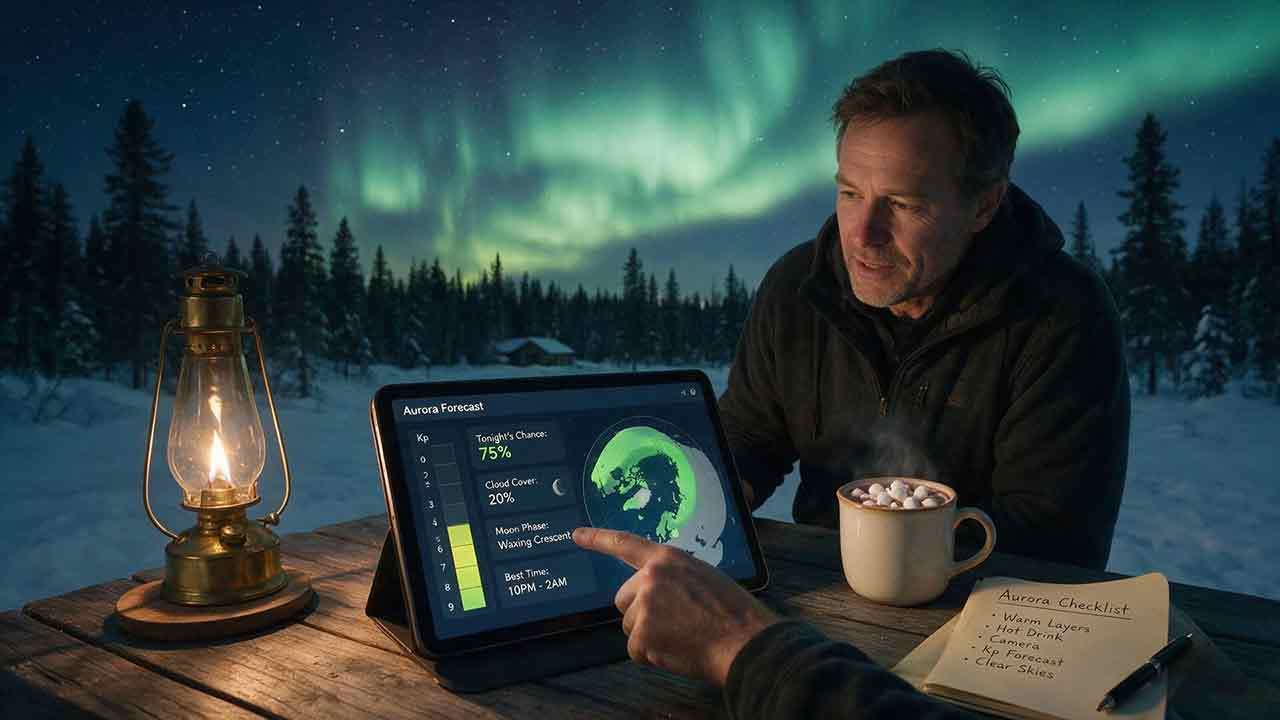
Learning how to read an aurora forecast requires more than checking a single Kp number. This practical guide explains how to evaluate the auroral oval, forecast timing, UTC conversions, Kp and NOAA storm levels, Bz orientation, solar-wind trends, cloud cover, darkness, and real-time observations. It introduces the CosmoBasics Four-Gate Aurora Viewing Framework—Reach, Darkness, Sky, and Timing—to help readers make a sensible go, wait, relocate, or stay-home decision. A hypothetical worked example demonstrates how several forecast indicators can be combined without treating any of them as a guarantee. The article also includes a final-hour viewing checklist, common forecasting mistakes, troubleshooting guidance, trip-planning considerations, safety reminders, and answers to frequently asked questions. Readers will finish with a clearer, more reliable process for judging aurora opportunities while recognizing the uncertainty and local conditions involved in every forecast.